
Walton Projected vs Actual Release
Walton's inmate detail can display both Scheduled Release Date and Release Date. The scheduled field is a projection. The Release Date documents departure from that booking after the event occurs. A pretrial detainee may have no fixed end date because bond, hearing results, dismissal, a new hold, or a later sentence can change the path. A sentenced county inmate may have a calculable date, but earned time and other orders still affect it.
State prison timing differs. GDC records, the Parole Board, and Georgia sentencing law control. A Tentative Parole Month means the Board expects final review around that month if conditions are met. It is not a fixed release day.
Lookup Walton Projected Release Dates
Choose the lookup from the custody system. Walton County Jail uses the New World inquiry for local bookings. The GDC offender search covers active and inactive Georgia offenders. The Parole Board handles TPM and parole decisions. BOP has the federal locator, while ICE has a separate detainee locator.
- Identify the agency now holding or sentencing the person.
- Search the Walton inquiry for a local booking and open its detail.
- For a state sentence, search GDC by name, ID, case number, or other supplied field.
- Check Board records if parole or a TPM applies.
- Compare the projection with the court order and known holds.
- Return after the expected date to confirm actual release.
If the online result is unclear, Walton Sheriff's open-records channel can provide the jail record. GDC offers written verification for state information. The Walton search and records hub explains the local request path.
Walton County Earned-Time Rule
For a county-inmate sentence, O.C.G.A. § 42-4-7 says release occurs at sentence expiration less earned-time allowances. Earned time after July 1, 2000 is not automatic or mandatory. It is based on institutional behavior and is subject to limits and exclusions. This is the right local rule for county-inmate sentences, not a formula for all Walton bookings.
GDC uses different state-prison rules. Its Performance Incentive Credit program can reduce length of stay for eligible people through satisfactory progress in programs, work, and conduct. PIC is not Walton jail earned time.
O.C.G.A. § 17-10-6.1 can require a serious violent felony sentence to be served in full without parole or earned-time reduction, subject to its transition provisions. Never apply a simple percentage without the offense, sentence, and official calculation.
Why Walton Release Dates Change
A projection uses facts known when it is calculated. Later orders, credits, or custody duties can move it. Some changes shorten a stay; others delay departure or cause transfer.
| Factor | Possible effect |
|---|---|
| Bond or court order | May create an earlier release or new direction. |
| Warrant, hold, or detainer | May delay community release or cause transfer. |
| Sentence credit or earned time | May reduce a county term when allowed. |
| Discipline or program status | May change credit or PIC eligibility. |
| Parole decision or TPM review | Can change state timing; a TPM remains tentative. |
| Recalculation | Can revise state or federal dates. |
BOP warns that First Step Act and other credit recalculations may change federal dates. A local release does not establish release from ICE.
Confirm Walton's Actual Release
Actual release requires a completed event. In Walton's inquiry, look for a filled Release Date and a row no longer marked in custody. Georgia VINE can report a change, but it does not replace the jail record. The court docket may explain bond, dismissal, probation, time served, completion, or transfer.
For GDC, search inactive as well as active offenders and use written verification when needed. A past BOP date with no listed facility means the person is no longer in BOP custody, though another system or supervision may still apply. The Walton VINE inmate check explains pending-release alerts.
Note: A transfer ends custody at one facility but may not mean release to the community.
How Walton Jail Dates Are Calculated
Walton's release-date question begins with the county rule when the person serves a county sentence. The statute ties discharge to sentence expiration less allowed earned time and makes behavior central to post-2000 credit. That prevents applying state parole or GDC PIC rules to a county-jail term.
The Scheduled Release Date remains a forecast even when earned time is included. Bond, court order, warrant, discipline, or transfer can intervene. Final proof is the Release Date, sheriff confirmation, VINE change, or court disposition.
The GDC query shown here is for state offenders:
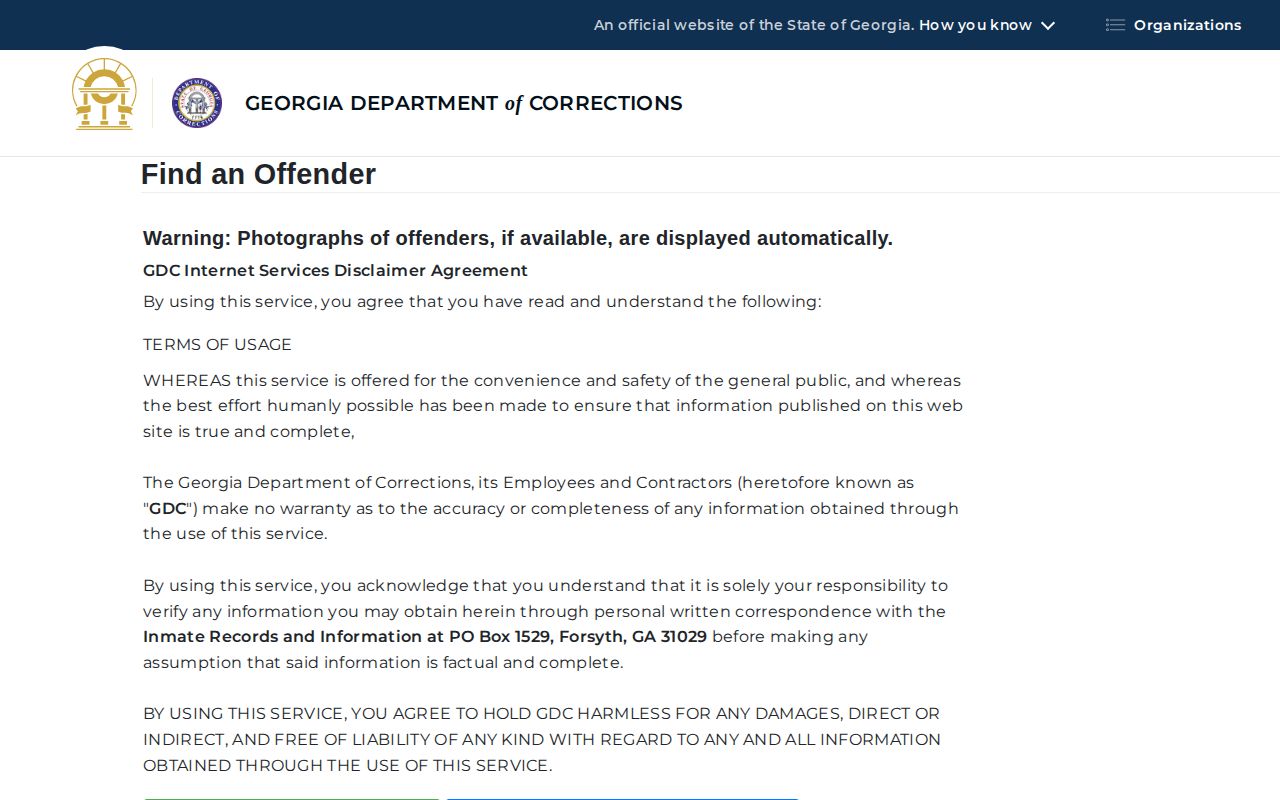
Select the custody-specific source before interpreting any projected date.
The Walton inquiry's detail fields help test a projection. Booking Date fixes the start of that jail event. Scheduled Release Date supplies the forecast. Release Date records the completed departure. Bond totals, bond status, court dates, sentence length, disposition, and disposition date may explain why the final date differs from the first estimate. Read all fields within the same booking because one person can have multiple bookings.
Local bond changes can move a date without resolving the criminal case. An observed Walton record placed a Release Date and Bond Posted disposition in the same booking history. That supported a bond-related jail release, not a finding that every charge ended. The court file remains the long-term source for dismissal, plea, probation, sentence, or later revocation.
Parole eligibility is also distinct from release scheduling. Georgia's general statute contains nine-month, one-third, and seven-year benchmarks along with exceptions. Eligibility only opens the Board's decision process. The Board can set a TPM, deny parole, or revise a prior decision before release. Conduct, program completion, detainers, and later review can change the outcome.
The Parole Board's TPM explanation is deliberately cautious. A TPM indicates when final review may be completed and, if appropriate, a release date set. It is not a promise. A person with a TPM remains in custody until the responsible agency records release. Use the parolee database and DCS supervision route after a parole release.
For federal sentences, a BOP date can change after First Step Act and other credit calculations. Check again periodically, as BOP advises. When the date passes and no facility remains listed, BOP treats that as release from BOP custody, but parole, supervised release, or another system may follow.
An ICE-related Walton booking line requires a separate check. A local Release Date can mean departure from the county jail while immigration custody continues. ICE's locator and direct legal or agency contacts determine that status. Do not label the person free from all custody based only on Walton's field.
For formal confirmation, a precise sheriff request should name the person, date of birth if known, booking or subject number, and approximate booking date. Ask for release date and time, authority or order, bond or release type if maintained, and charge or disposition fields. Walton says open-records requests receive a response within three business days, though the response may give a timeline or cost estimate rather than the final record.